Tuesday, November 30, 2010

The Code of Omerta

Does the media protect its own, even its blackest sheep? Do big movie stars create their own gangs so that they can manipulate the film industry and keep it under their absolute control? Do politicians have an unwritten rule that whatever they may say against each other in public, no one will ever cross the line and they can plunder the nation together? Do builders work together, even as they compete in the marketplace, to create an artificial pricing mechanism that ensures huge profits for them? Do gangsters carve out their own territories and ensure that no one enters another’s area to commit a crime or claim a share of the loot? Do pharma companies form secret cartels to further their business interests often at the cost of endangering public health and shamelessly profiteering? Do sporting heroes decide ahead of a match, in deals struck with bookmakers, who will win and who will lose?

Read the rest of this interesting article :
The code of Omerta : India : Pritish Nandy : TOI Blogs

Thursday, November 25, 2010

Dragging India Out of the Muck

Dragging India Out of the Muck - Sadanand Dhume - WSJ.com
If Prime Minister Singh wants to be remembered as more than just a personally clean man who presided over a staggeringly corrupt administration, he needs to establish similar institutions to fight graft. Activists believe a good place to start would be an independent anti-corruption commission backed with investigative powers, prosecutorial heft and fast-track courts. Only when India begins to rein in its out-of-control politicians will it be realistic to be squeamish about those who report on them.

.... Read the rest of the story
Sadanand Dhume: Dragging India Out of the Muck - WSJ.com

Sunday, November 21, 2010

Black Money

Illegal financial flows: the great drain robbery


Black money accounts for 50% of GDP, the report says
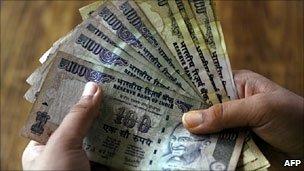
India has lost more than $460bn since Independence because of companies and the rich illegally funnelling their wealth overseas. The actual figure could be much more, as it did not include smuggling and cash transfers outside the financial system. (For a general perspective - $1billion is equal to about Rs.4600 crores)

The illegal flight of capital through tax evasion, crime and corruption had widened inequality in India. According to the report from US-based group Global Financial Integrity, the illicit outflows of money increased after economic reforms began in 1991. Many also accuse governments and politicians of corruption in India.

Global Financial Integrity, which is based in Washington, studies and campaigns against the cross-border flow of illegal money around the world. It said that the "poor state of governance" had been reflected in a growing underground economy in India since Independence in 1947.

Global Financial Integrity director Raymond Baker said the report "puts into stark terms the financial cost of tax evasion, corruption, and other illicit financial practices in India".

Some the main findings of the report are:
  • India lost a total of $462bn in illegal capital flows between 1948, a year after Independence, and 2008.
  • The flows are more than twice India's external debt of $230bn.
  • Total capital flight out of India represents some 16.6% of its GDP.
  • Some 68% of India's capital loss has happened since the economy opened up in 1991.
  • "High net-worth individuals" and private companies were found to be primary drivers of illegal capital flows.
  • The share of money Indian companies moved from developed country banks to "offshore financial centres" (OFCs) increased from 36.4% in 1995 to 54.2% in 2009.
The report's author, Dev Kar, a former International Monetary Fund economist, said that almost three quarters of the illegal money that comprises India's underground economy ends up outside the country.
India's underground economy has been estimated to account for 50% of the country's GDP - $640bn at the end of 2008.

According to Hindu :  India is losing nearly Rs.240 crore every 24 hours, on average, in illegal financial flows out of the country.

Foot note : (another report)
The Swiss Justice Department on Friday said that the Government of India was dragging its feet on the black money issue.

In a Headlines Today exclusive, the department also said the Indian government had submitted forged documents to Swiss authorities in the $ 8-billion Hassan Ali money laundering case in January 2007. Stud farm owner Hassan Ali had illegally transferred $ 6 billion to UBS accounts and came under the Enforcement Directorate's radar.

Swiss government spokesman Folco Galli told Headlines Today that the Indian government was informed about the fake documents by Swiss authorities in January 2007 itself. Further, the Swiss claimed to have submitted certain queries to the Indian government in April 2007 but New Delhi has not bothered to file a reply even 24 months later.

Since the black money issue became a major election plank for the Lok Sabha polls, the Centre claimed in the Supreme Court that it has been doing what it can to bring back the black money stashed in Swiss banks. The Centre's affidavit in the SC however fails to mention that the Swiss have questioned the authenticity of the documents.

In fact, the Swiss spokesman's answer seems to suggest there has been little or no action from the government's side for the last two years in seriously pursuing the probe against Hassan Ali Khan.

The last sentence in the response of the Swiss is telling. Galli says, "India makes only few requests per year to Switzerland for legal aid in tracking down black money."

Given the black economy is considered much bigger than the Indian economy, the UPA government has a lot to answer for.

The Centre has been claiming that Swiss domestic laws don't allow them to access their bank accounts.


Sunday, October 31, 2010

Prosperity Index

India is ranked 88 out of 110 countries in The 2010 Legatum Prosperity Index.

Norway was ranked 1st, Australia 4th, USA 10th, China 58th all well ahead of us.

Our predicament is shared by Bangladesh 96th, Rwanda 98th, Ethiopia 107th and Pakistan 109th.

The Legatum Prosperity Index is the world's only global assessment of wealth and wellbeing; unlike other studies that rank countries by actual levels of wealth, life satisfaction or development, the Prosperity Index produces rankings based upon the very foundations of prosperity those factors that will help drive economic growth and produce happy citizens over the long term.

I have compared our rating with Norway in the graph to make us aware where we are lagging. I did not want to compare ourself with Pakistan or Zimabwe ranked 110.

Let us see why we rank so low in spite of such economic strengths :

1) Economy - Ranked 44th - India’s economy is growing steadily and contributing to public optimism despite current low standards of living. India places just 61st with regard to citizens’ ability to access affordable food and shelter. Only six out of 10 people are content with their standards of living, placing the country 64th on this variable.

2)  Entrepreneurship & Opportunity - Ranked 93rd. Indians are optimistic of business opportunities, despite poor entrepreneurial infrastructure and social inequality. Indians are extremely pessimistic about the local entrepreneurial environment: only 56% of people believe their local area is a good place to look for a job, placing India amongst the lowest 15 countries on this Index. In addition, India has a weak infrastructure for entrepreneurship: less than a third of the population owns a mobile telephone, internet bandwidth capacity is only moderate, and the availability of secure internet servers is low.

3) Governance - Ranked 41st India’s democratic structures are stable and well-regulated, helping to secure public approval. India is a relatively successful democracy. The current regime has been in place for approximately six decades, indicating a high level of stability. Although the rule of law is strong, the view that corruption is widespread in government and businesses is common, placing India 72nd on this variable. Similarly, regulation of the business environment is inadequate.

4) Education - Ranked 89th. Low enrolment rates and large classes result in poor human capital. India has a poorly developed education system. Net primary enrolment is below average at 90%, gross secondary enrolment is low at 57%, and gross tertiary enrolment is at 13%. India ranks in bottom third of the Index on all three variables. According to a 2009 survey, less than three-quarters of respondents were satisfied with their local educational facilities, placing India 53rd on this variable.

5) Health - Ranked 95th. India has extremely poor healthcare, failing to prevent systemic diseases or malnourishment. One in 20 children die within the first year of life in India, and almost one-in-five people are malnourished, indicating poor public health. Indians have a life expectancy of only 53 healthy years. Preventative healthcare is extremely ineffective in India: only 62% of children are immunised against infectious diseases and only 67% are immunised against measles, placing India in the bottom 10 countries on both variables.

6) Safety & Security - Ranked 78th. Indians face threats arising from displacement, political violence, and crime. India faces political and demographic problems, which threaten its national security. There is a high level of displacement in India, resulting in a sizeable community of refugees and internally displaced persons, and there are many group grievances arising from current and historic injustices. According to a 2009 survey, an above-average 6% of people had been assaulted in the previous year, but only 8% had been victims of theft, placing India 63rd and 12th, respectively, on these variables. Additionally, three-quarters of people feel safe walking alone at night, ranking 28th, globally.

7) Personal Freedom - Ranked 74th. In India, individual freedoms are limited and tolerance of immigrants remains low. Indians are somewhat restricted in their civil liberties, and the country places 53rd with regard to freedoms of expression, belief, association, and personal autonomy. According to a 2009 survey, only 68% of people are satisfied with their freedom to choose what they do with their lives, placing India 67th on this variable. Less than half of people surveyed believe that their city is a good place for immigrants to live, placing India 95th on this variable. A slightly higher 63% believed that ethnic and racial minorities are welcomed in their city, placing India 65th on this variable.

8) Social Capital - Ranked 105th. Family and religion are important factors, which tie together the Indian society. According to a 2009 survey, an above-average 21% of Indians believe they can trust others. However, objective measurements of social capital are less positive. Only 19% of people had donated to a charity in the previous month and just 13% had formally volunteered their time over the same period, placing India 76th and 77th, respectively, on these variables. Similarly, only 36% of people had helped a stranger in the previous month, indicating relatively poor community relations. Social networks are reasonably well-developed. India has the second-highest rate of marriage at 75%, indicating the potential for strong access to familial networks. Access to religious networks may also be strong, with almost three-quarters of respondents to a 2009 survey having attended a place of worship in the preceding seven days. Despite these networks, less than two-thirds of people claim they can rely on family or friends in times of need, placing the country just 102nd on this variable.

The above observations are the criteria on which we are ranked 88 / 110. Please check out for other comparisons with other nations and see where we lack and need to improve - click on link below :
http://www.prosperity.com/default.aspx

Saturday, October 30, 2010

Aspirations

Don't deprive me of my just due - or I will go to Pakistan.


Ha, just learn't that this cartoon is appearing in Outlook.

Saturday, October 16, 2010

Man behind rescue

Straight-talking engineer was behind Chile rescue

By VIVIAN SEQUERA, Associated Press Writer – Fri Oct 15, 7:25 pm ET

SAN JOSE MINE, Chile – Three days after 33 men were sealed deep within a gold mine, Andre Sougarret was summoned by Chile's president. The Chilean leader got right to the point: The square-jawed, straight-talking engineer would be in charge of digging them out.

At first Sougarret worried — no one knew if the miners were alive, and the pressure was on to reach them. And he knew he would be blamed if the men were found dead "because we didn't reach them or the work was too slow." But eventually, contact was made, the work was on, and the miners below were calling him "boss."

The mission was unprecedented. No one had ever drilled so far to reach trapped miners. No one knew where to find them. From the first confusing days to this week's glorious finale, the 46-year-old Sougarret was the man with the answers.

And at the end, the last miner to reach the surface, shift foreman Luis Urzua, would tell him: "People like you are worth a lot of money in Chile."

Sougarret's management of the crisis was so successful that nearly all the rescued miners walked out of the hospital Friday perfectly healthy. While a handful left through one door into a news media storm, most of the others were secreted away through a side entrance to be taken home, hospital officials said. Two of the miners required more attention and were transferred to other hospitals.

In an interview with The Associated Press, Sougarret told how he assembled a team of experts and methodically worked the problem that would become the biggest challenge of his life.

In choosing the young Chilean mining expert, President Sebastian Pinera had turned to the man who ran the world's most productive subterranean mine, El Teniente, for Chile's state-owned Codelco copper company. A methodical engineer who stays cool-headed under pressure, Sougarret said he tried not to dwell too much on the men he was trying to save. "I never allowed myself to think about what was happening with them — that's anxiety-causing," he said. "I told myself, 'My objective is to create an access, a connection. Put that in your head. Why they were there and what happened, that's not my responsibility. My responsibility is to get there and get them out."

Sougarret flew immediately to the mine in Chile's northern Atacama desert, and encountered a nest of confusion, with rescue workers, firefighters, police officers, volunteers and relatives desperate for word about the fate of their men down below. Gently but firmly, Sougarret made his first move: ordering out the rescue workers until there was, in fact, someone to rescue. He asked for any maps of the mine and assembled a team, starting with Rene Aguilar, the 35-year-old risk manager at El Teniente.

In the weeks that followed, the two men built an operation that grew to more than 300 people. Among their first steps was to ride into the mine in a truck. "We knew it collapsed. What does collapsed mean?" Sougarret said. "What we found was a block, a tombstone, like when you're in an elevator and the doors open between floors." The smooth, solid wall was part of a huge block of stone that cut off the shaft that corkscrews for more than four miles (seven kilometers) to a depth of 2,625 feet (800 meters). They later determined the cave-in started at a depth of about 1,000 feet (355 meters), and brought down the very center of the mine, some 700,000 tons of rock. Drilling through would risk provoking another collapse, crushing anything below.

So, an entirely new shaft would have to be drilled to try to reach the men. And they needed to call in more expertise: the miners who had narrowly escaped being crushed in the Aug. 5 collapse. "It was important to talk with the three who came out last," Aguilar recalled. These men knew what was in the lower reaches of the mine: tanks of water, ventilation shafts, a 48-hour food supply in a reinforced refuge far beneath the surface.

A map was key to reaching the men. The drills would have to seek a path through solid rock to avoid veering off into an open or collapsed space below. But this mine had been so honeycombed over its long history that there were no precise maps. They would have to make their best guesses about where to drill.

"We were building an idea about where they might be," Sougarret said. The miners who surfaced before the cave-in described where the men would have been working: likely near a workshop and reinforced refuge where they normally gathered to be taken to the surface for their lunch break. "Now with all these elements, one could clearly say there is a hope that they were alive," Sougarret said.

When Sougarret took over, seven companies were already involved in trying to reach the men. He decided to keep some of those on, aiming at the workshop 2,041 feet (622 meters) underground and the refuge, at 2,100 feet (700 meters). "We were learning as we were drilling. And the days were beginning to pass," he said. "I clearly thought the men could survive for 30 days, maybe 40 depending on the condition of some of the people, with water and air, without food. ... That was the fact that I kept in my head," Sougarret said.

Then, on Aug. 19, came a crisis: The drill reached 700 meters, and nothing. "It passed 710, passed 720, and we got to 770 and didn't find anything." The drill had veered off, passing so close to the refuge that the miners could hear and feel it. "That started a crisis with the families. They were very upset because we hadn't reached them," Sougarret said.

"There were meetings, there were protests. It was hard," Aguilar added. There was tremendous pressure. "It would be my fault if they were to die because we didn't reach them or the work was too slow," Sougarret said.

"The fact is, nobody wanted to show their face, nobody, not one of the companies that were doing the drilling. The only ones were me and Rene. ... It was only after we reached them and everything was going well that the flags showed up and the whole show started."

Finally, on Aug. 22, came success: The drill broke through to the shaft about 150 feet (50 meters) from the miners' refuge. From the surface, the rescue team thought they could hear banging on the drill head. Pulling it up, they found a message tied in a plastic bag and pressed inside the thread of the drill: "We're all OK in the refuge, the 33."

In the days that followed, two more boreholes would break through, providing a life line for sending down food, medicine and messages of encouragement. As soon as the miners were found alive, Sougarret mobilized three much more powerful drills, soon to be known as Plan A, Plan B and Plan C, each with different methods of pounding through the rock. A third borehole was designated as a guide for the Plan B drill, which widened it from about 6 inches (15 centimeters) to 28 inches (70 centimeters) to provide the miners with a way out.
"Now with three plans it was enough for the two objectives we were looking for: shorten the time and minimize risks," Sougarret said. "There were many factors that I couldn't control, and the only way to minimize risks is to have alternatives."

Every day without fail, Sougarret talked with the trapped miners, first on a phone dropped down the hole, and eventually by video conference calls. "They gave us ideas. They were proactive, (saying) 'Don't worry, Boss, tomorrow I'll tell you if it can be done.'"

Some miners drew up maps using measuring devices the rescuers sent down the boreholes. With three drills advancing toward the men, it was only a matter of time. While Pinera pledged to bring the miners home by Christmas, Sougarret calculated the potential velocity of each drill and bet on three dates: Dec. 1 for Plan A to reach the refuge, Oct. 10 for Plan B to reach the workshop and Oct. 30 for the shaft in between. At 8:05 a.m. on Oct. 9, Plan B broke through. He had been off by a single day. It was still necessary to encase the top of the tunnel in steel pipes and test the escape capsule, but Sougarret was no longer nervous.

"This last stage for me was like butter," he said with a smile.

"I always said that if these people are alive and I have contact with them and I can get food to them, they could spend a year (below) and nothing will happen to them. It was a question of time." There was much talk during the rescue about controlling the information reaching the miners to keep them from becoming demoralized about how long the rescue would take. But Sougarret always told them the truth. Urzua, the shift foreman, had this to say as he hugged the man who saved the 33: "You always gave us the straight talk, always speaking the truth."